
Welcome to the Forams subsite on Invertebrate Paleontology!
Please enter a genera name to retrieve more information.
Archaediscus
Classification
Phylum:
Protista
Subphylum:
Sarcodina
Class:
Reticularea
Subclass:
Granuloreticulosia
Order:
Foraminiferida
Suborder:
Fusulinina
Superfamily:
Endothyracea
Family:
Archaediscidae
Formal Genus Name and Reference:
Archaediscus BRADY, 1873, *189, p. 286
Type Species:
*A. karreri; OD (M)
Images
(Click to enlarge in a new window)
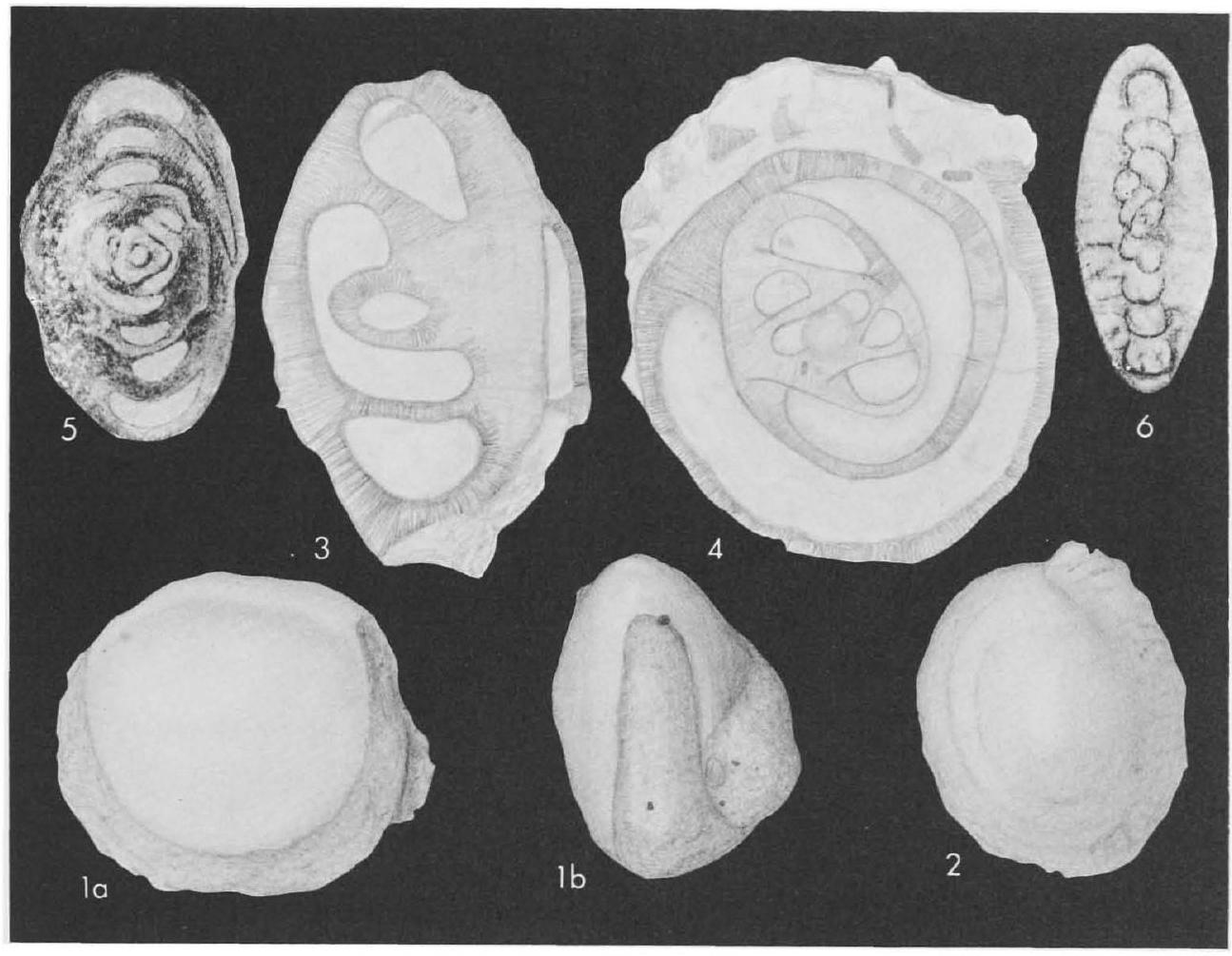
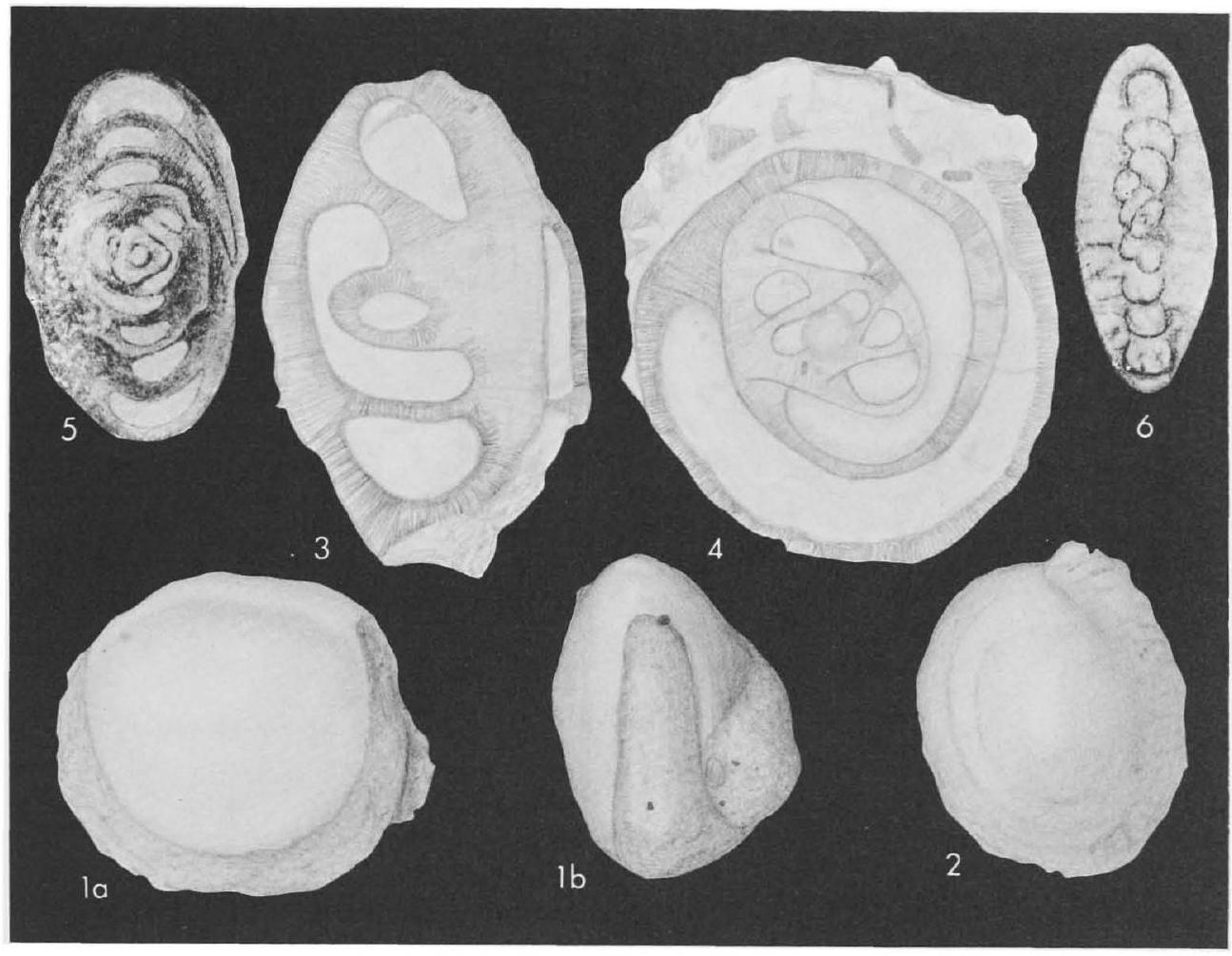
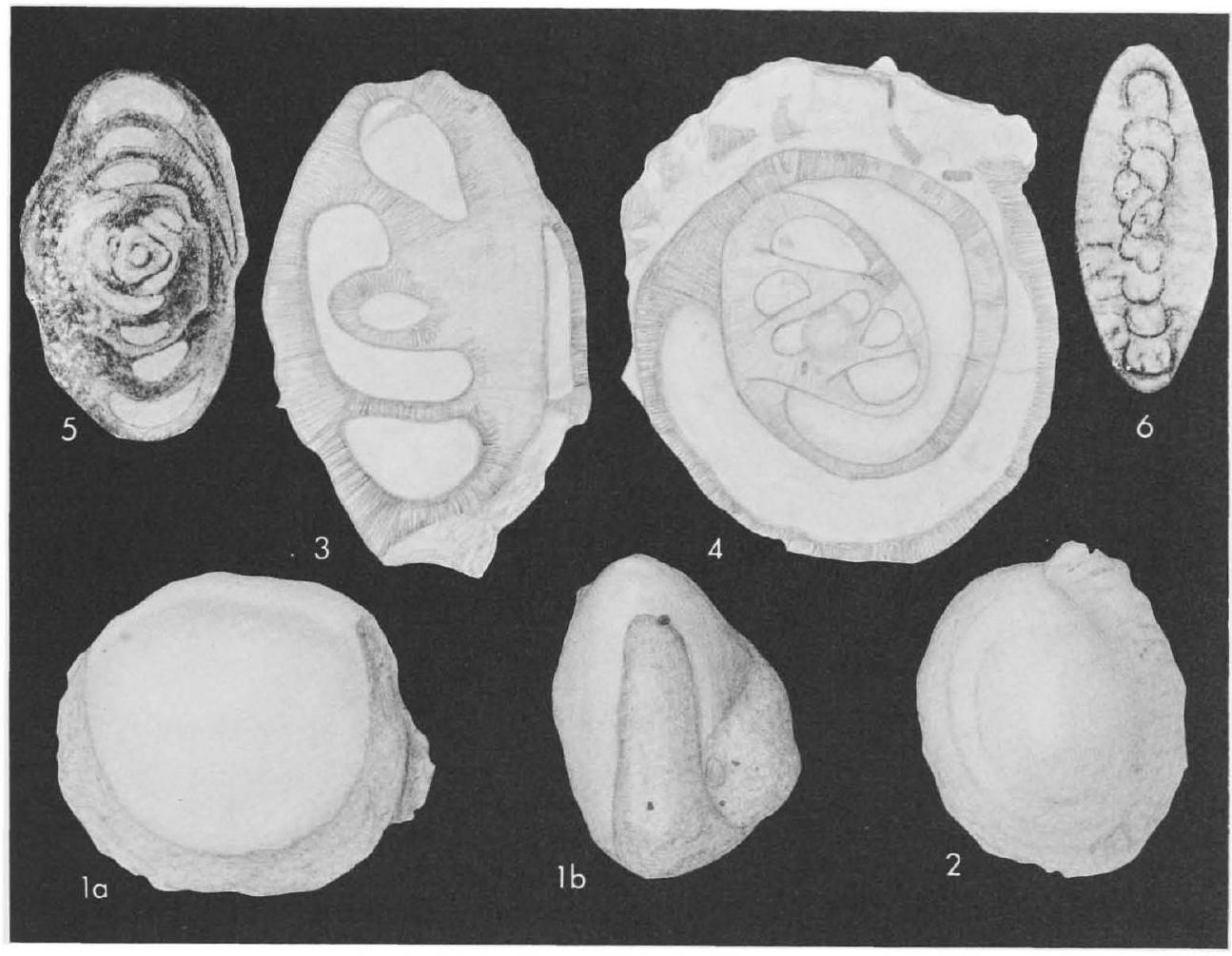
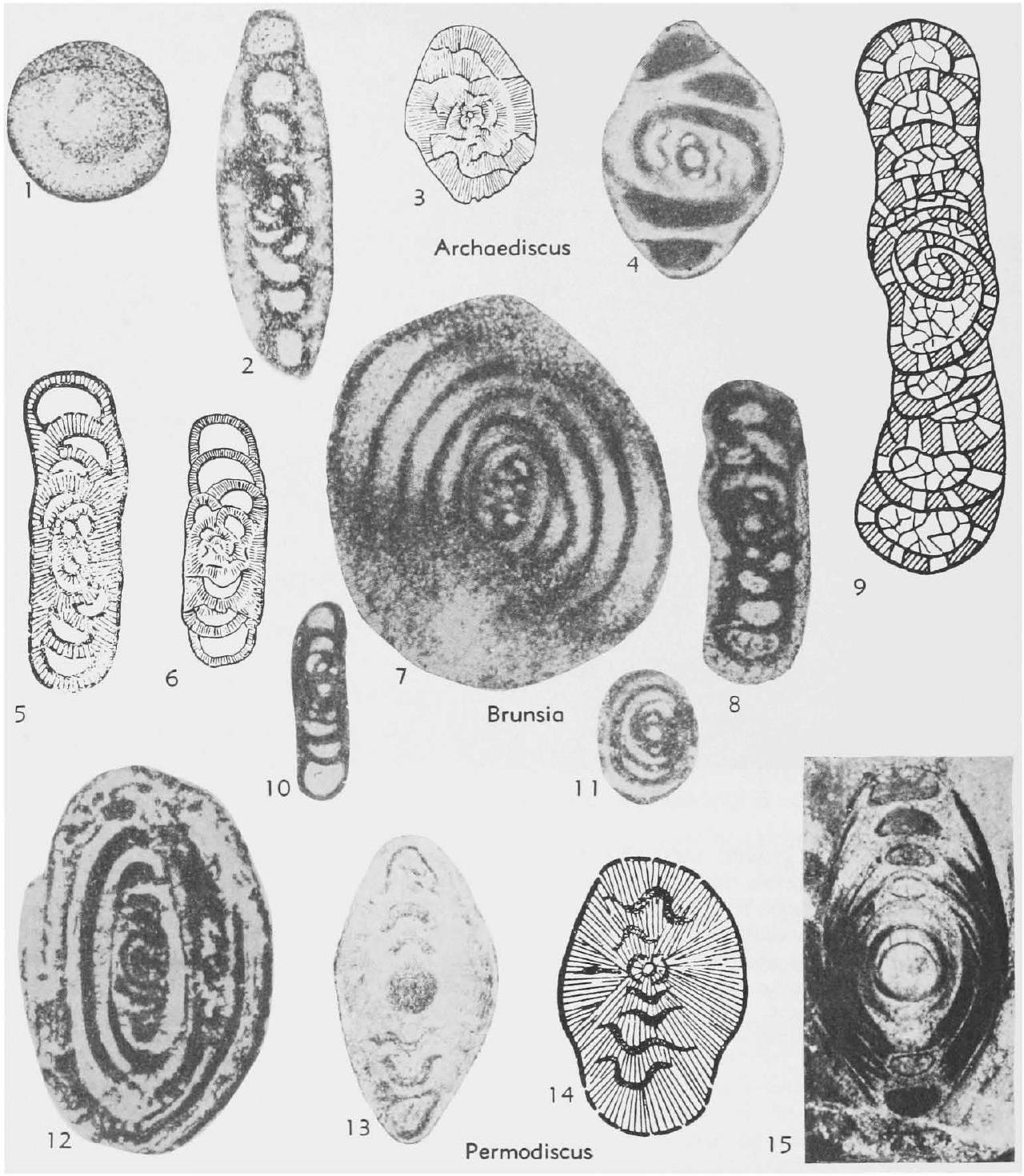
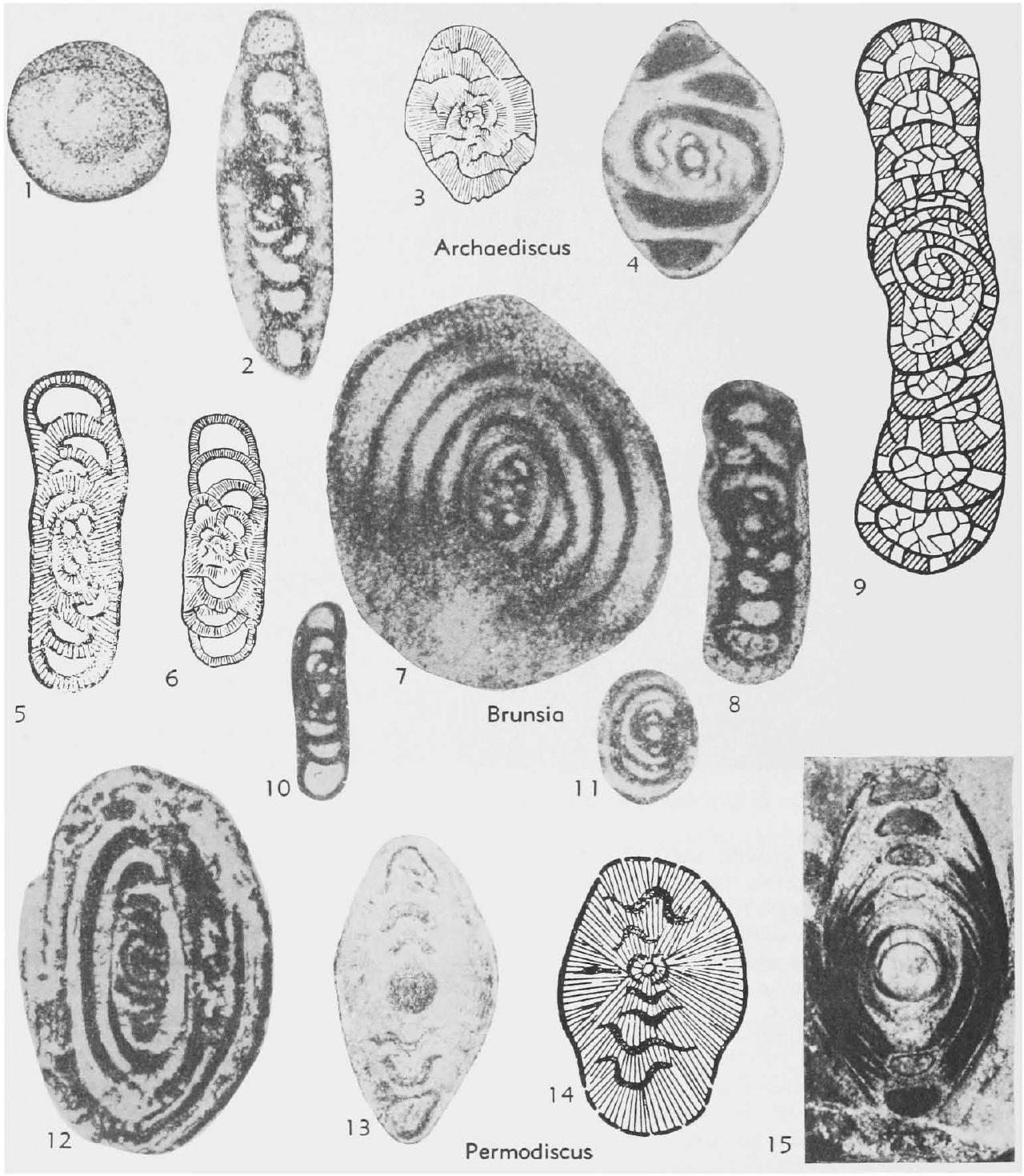
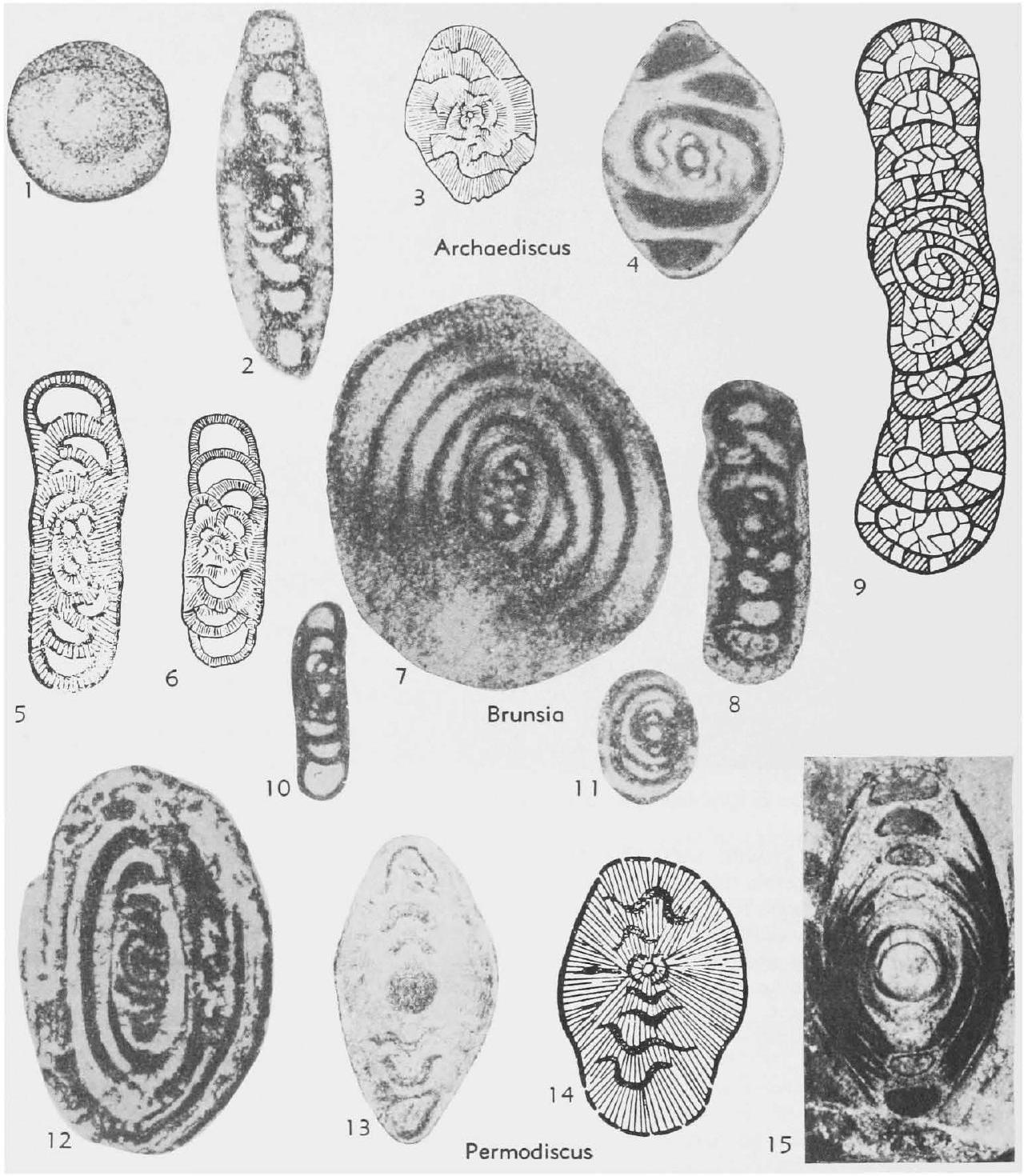 Fig. 271,1-4. *A. karreri, Carb., Eng., 1 a, b, side, edge views of syntype, 2, syntype in which later planispiral development can be distinguished, 3, axial sec. of syntype, 4, equat. sec . of syntype, all X64 (*2117). --Fig. 271,5. A. milliloides (Miklukho-Maklay), U.Perm., Caucasus, axial sec. of holotype, X17 (*1262). --Fig. 271,6. A. ulmeri (Mikhaylov), L.Carb. (Visean), USSR, X80 (*1262). --Fig. 272,1,2. A. dubitabilis (Orlova), U.Tournais., Saratov, 1 , ext., X40, 2, axial sec. of holotype, X100 (*1399). --Fig. 272,3. A. baschkiricus Krestovnikov & Teodorovitch, M.Carb.(Bashkir. ), USSR(Kolva), axial sec., X100 (*1509). --Fig. 272,4. A. akchimensis Grozdilova & Lebedeva, L.Carb.(L.Bashkir. ), USSR, axial sec., X100 (*831)
Synonyms
Geographic Distribution
Eu.
Age Range
Beginning Stage in Treatise Usage:
L.Carb.
Beginning International Stage:
Tournaisian
Fraction Up In Beginning Stage:
0
Beginning Date:
359.3
Ending Stage in Treatise Usage:
Perm.
Ending International Stage:
Changhsingian
Fraction Up In Ending Stage:
100
Ending Date:
251.9
Description
Test free. lenticular; proloculus followed by streptospirally coiled, long, undivided tubular second chamber, evolute, tending to become more nearly planispiral with growth; wall calcareous, finely fibrous, with noticeable thickenings at sides of test, no outer imperforate layer observed; aperture at open end of tube. [Different generic names have been given to forms with varying degrees of symmetry of test thickening and relative amount of planispiral development. These are here regarded as specific distinctions only.]
References
Museum or Author Information
Classification
Phylum:
Protista
Subphylum:
Sarcodina
Class:
Reticularea
Subclass:
Granuloreticulosia
Order:
Foraminiferida
Suborder:
Fusulinina
Superfamily:
Endothyracea
Family:
Archaediscidae
Formal Genus Name and Reference:
Archaediscus BRADY, 1873, *189, p. 286
Type Species:
*A. karreri; OD (M)
Images
(Click to enlarge in a new window)
Fig. 271,1-4. *A. karreri, Carb., Eng., 1 a, b, side, edge views of syntype, 2, syntype in which later planispiral development can be distinguished, 3, axial sec. of syntype, 4, equat. sec . of syntype, all X64 (*2117). --Fig. 271,5. A. milliloides (Miklukho-Maklay), U.Perm., Caucasus, axial sec. of holotype, X17 (*1262). --Fig. 271,6. A. ulmeri (Mikhaylov), L.Carb. (Visean), USSR, X80 (*1262). --Fig. 272,1,2. A. dubitabilis (Orlova), U.Tournais., Saratov, 1 , ext., X40, 2, axial sec. of holotype, X100 (*1399). --Fig. 272,3. A. baschkiricus Krestovnikov & Teodorovitch, M.Carb.(Bashkir. ), USSR(Kolva), axial sec., X100 (*1509). --Fig. 272,4. A. akchimensis Grozdilova & Lebedeva, L.Carb.(L.Bashkir. ), USSR, axial sec., X100 (*831)
Synonyms
Geographic Distribution
Eu.
Age Range
Beginning Stage in Treatise Usage:
L.Carb.
Beginning International Stage:
Tournaisian
Fraction Up In Beginning Stage:
0
Beginning Date:
359.3
Ending Stage in Treatise Usage:
Perm.
Ending International Stage:
Changhsingian
Fraction Up In Ending Stage:
100
Ending Date:
251.9
Description
Test free. lenticular; proloculus followed by streptospirally coiled, long, undivided tubular second chamber, evolute, tending to become more nearly planispiral with growth; wall calcareous, finely fibrous, with noticeable thickenings at sides of test, no outer imperforate layer observed; aperture at open end of tube. [Different generic names have been given to forms with varying degrees of symmetry of test thickening and relative amount of planispiral development. These are here regarded as specific distinctions only.]