
Welcome to the Forams subsite on Invertebrate Paleontology!
Please enter a genera name to retrieve more information.
Bathysiphon
Classification
Phylum:
Protista
Subphylum:
Sarcodina
Class:
Reticularea
Subclass:
Granuloreticulosia
Order:
Foraminiferida
Suborder:
Textulariina
Superfamily:
Ammodiscacea
Family:
Astrorhizidae
Subfamily:
Rhizammininae
Formal Genus Name and Reference:
Bathysiphon M. Sars in G. O. Sars, 1872, *1630, p. 251
Type Species:
B. filiformis, OD
Images
(Click to enlarge in a new window)
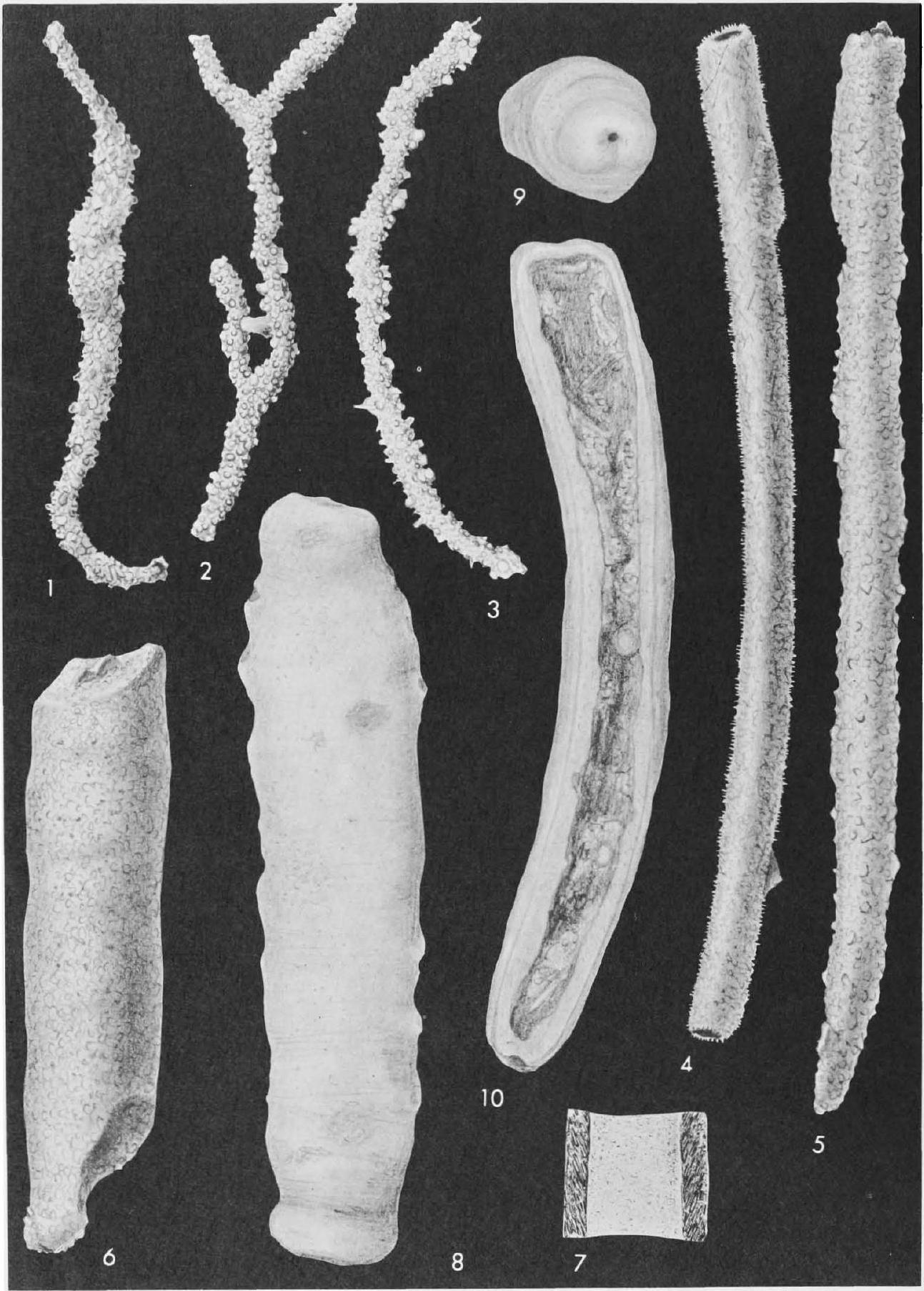
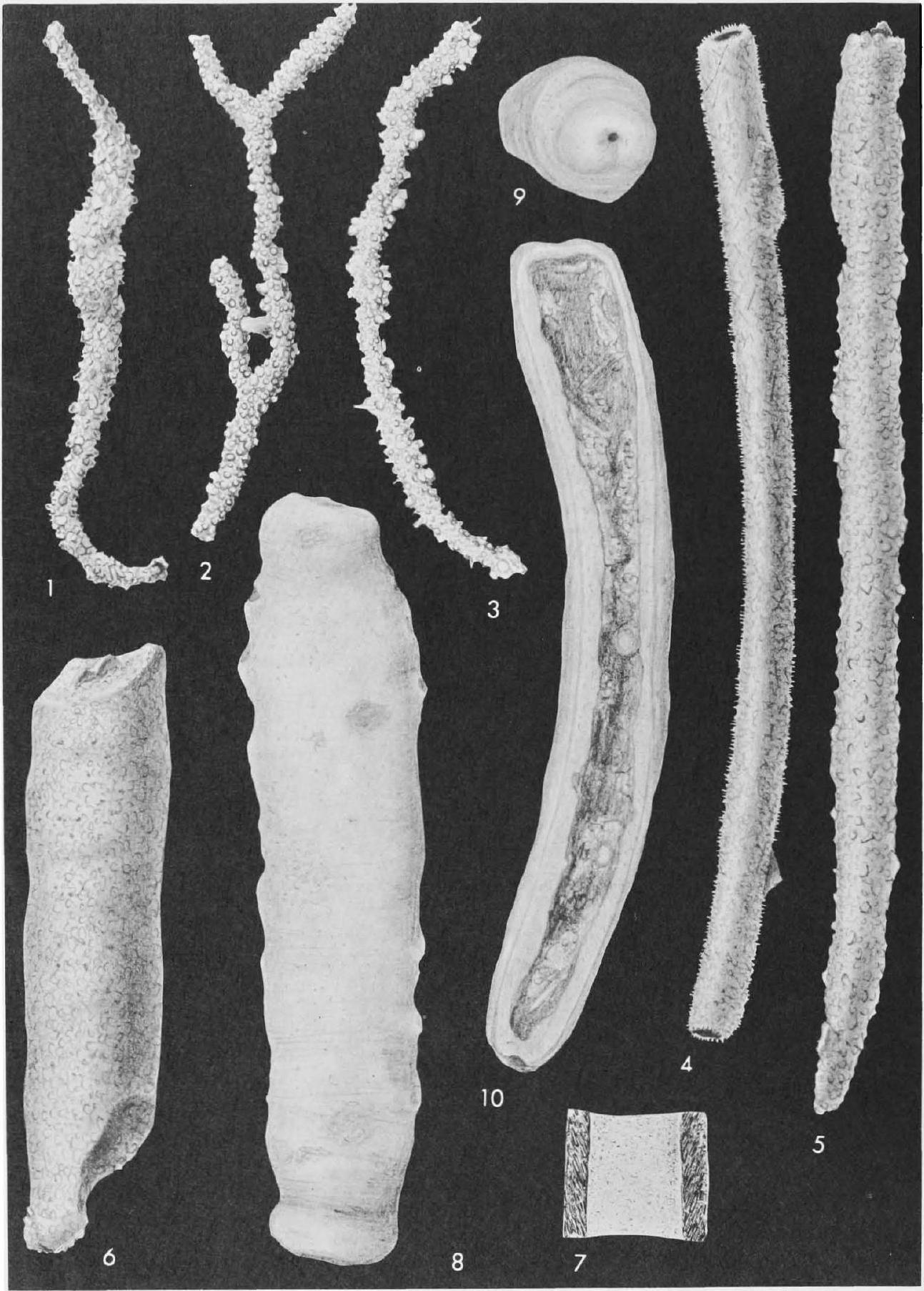
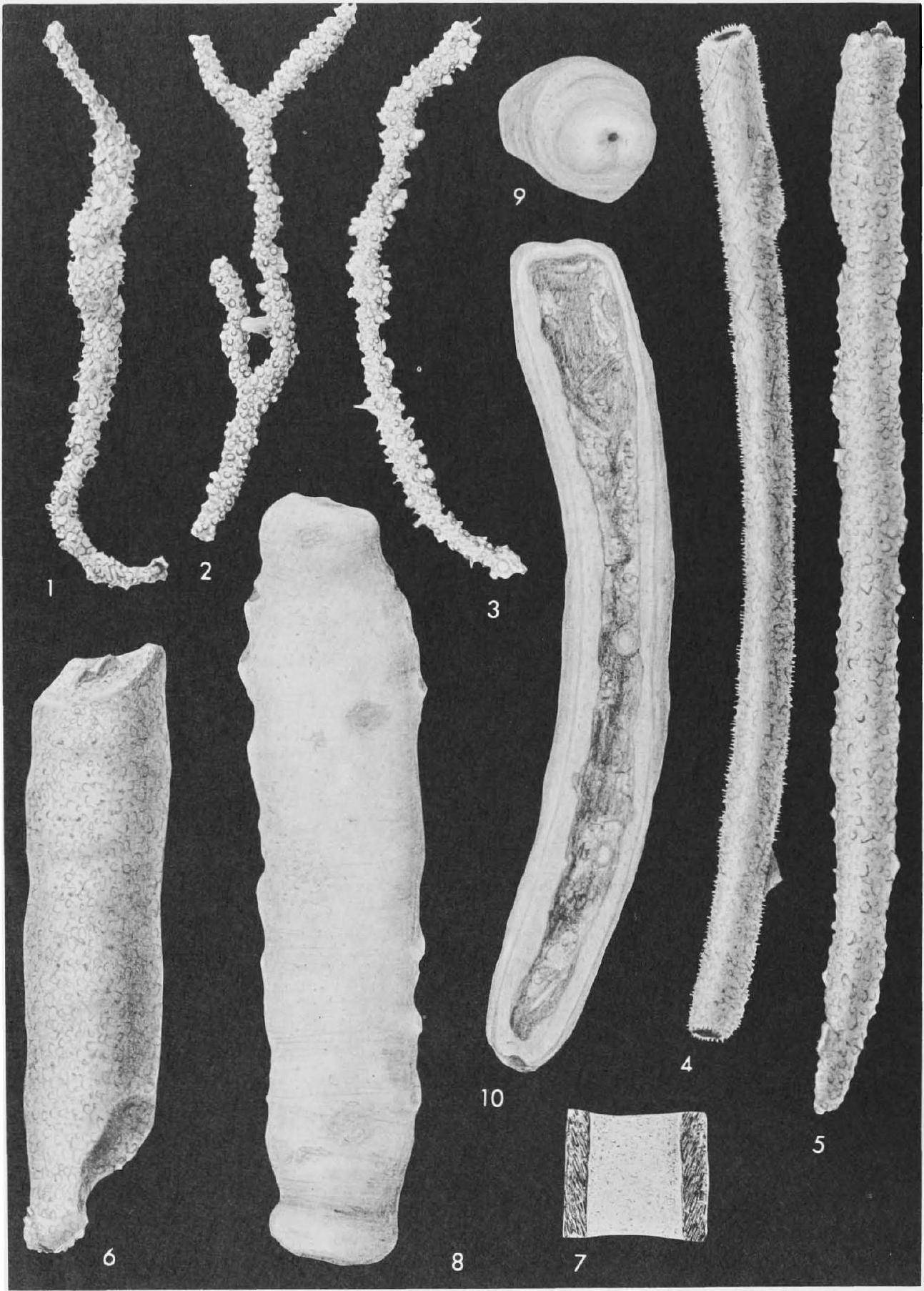
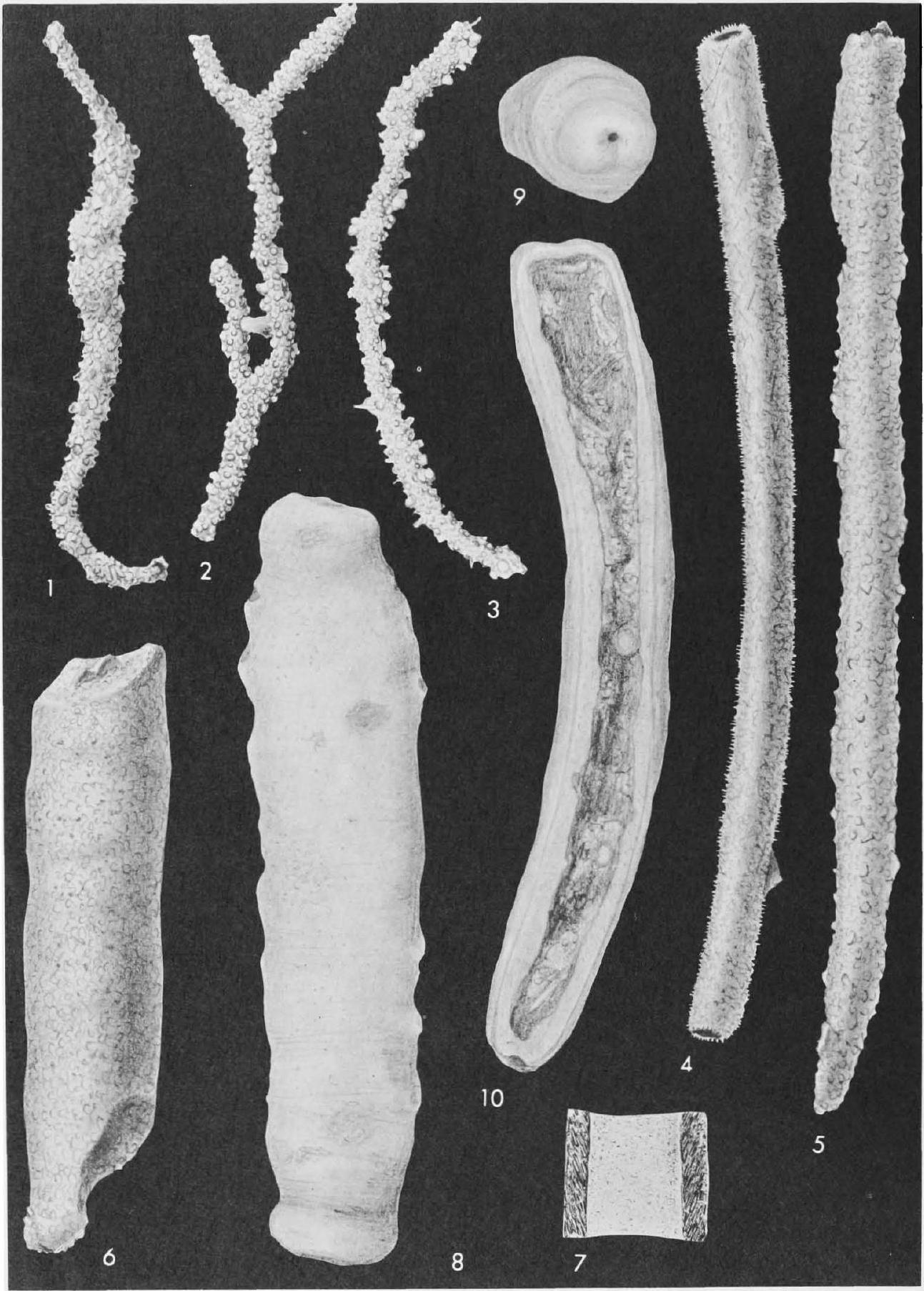
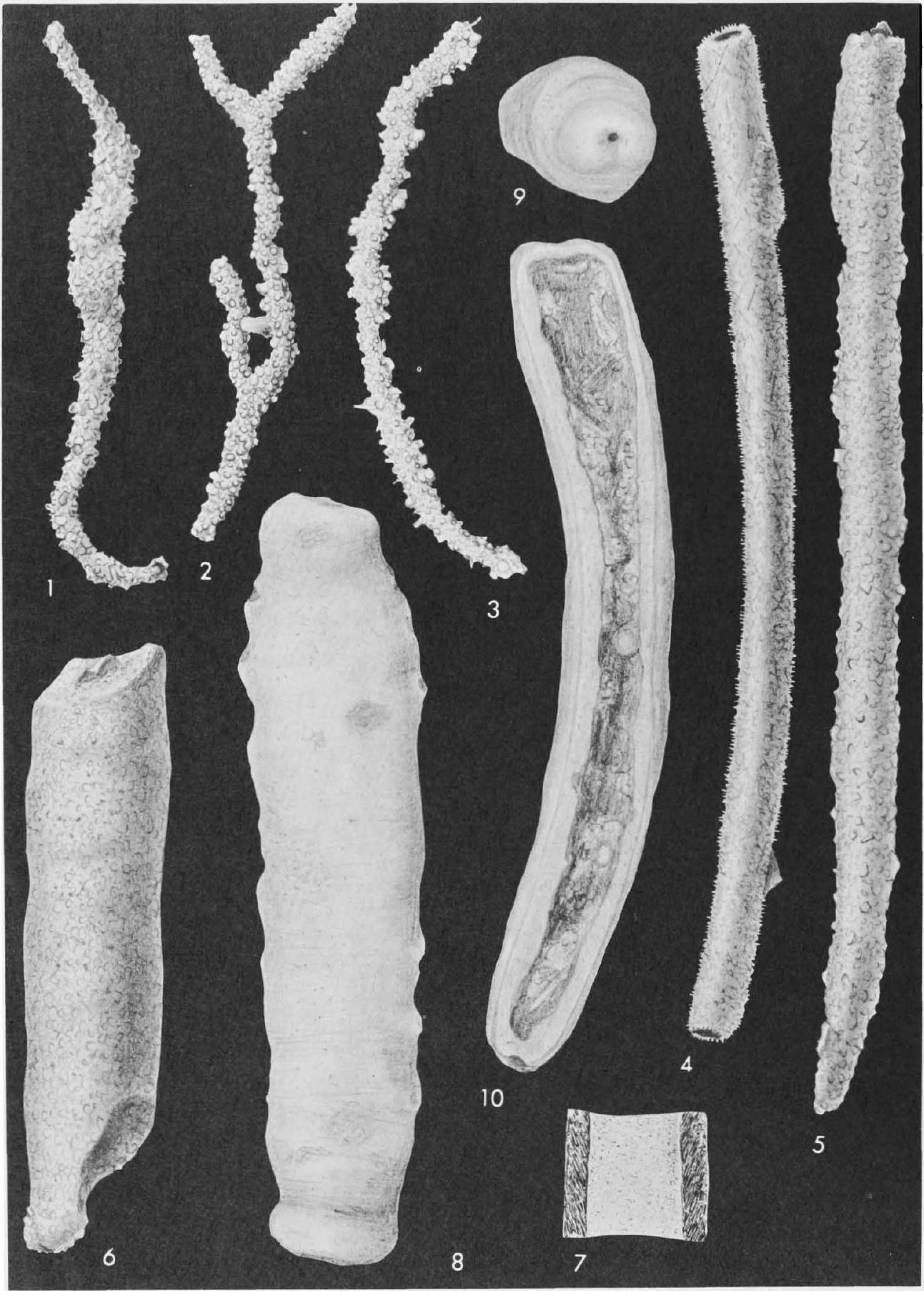
 Fig. 105,4. *B. filiformis, Rec., Pac.O., X8 (*2117), Fig. 105,5. B. gigantea (Grubbs), Sil. (Niagaran), USA(Ill.), X16 (*2117), Fig. 105,6. B. arenacea Cushman, Rec., Pac.O., holotype, refigured, X39 (*2117), Fig. 105,7. B. flexilis Höglund, Rec., N.Sea, long. sec. showing imbricated layers of ?mica grains in fine-grained groundmass, X880 (*924), Fig. 105,8-10. B. hirudinea (Heron-Allen & Earland), Rec., S. Atl. (S.Georgia Is. ), 8, lectotype, here designated and figured, one of original syntypes but not figured previously (BMNH-ZF 3300), 9, top view of paratype, also figured by Heron-Allen & Earland (*914d, pl. 1, fig. 10) (BMNH-ZF 3300), 10, paratype, long. sec. redrawn, specimen figured (*914d, pl. l, fig. 9) (BMNH-ZF 3301), all X41 (*2117)
Synonyms
Rhabdamminella, Arbathysiphum, Hippocrepinella, Arenosiphon, Psammosiphonella, Micatuba, Argillotuba
Geographic Distribution
cosmop.
Age Range
Beginning Stage in Treatise Usage:
L.Cam. [1964 version => probably Epoch 2 in 2020 scale]
Beginning International Stage:
Cambrian Stage 3
Fraction Up In Beginning Stage:
0
Beginning Date:
521
Ending Stage in Treatise Usage:
Rec.
Ending International Stage:
Meghalayan
Fraction Up In Ending Stage:
100
Ending Date:
0
Description
Test free, large, to 50 mm in length, elongate, narrow, more or less flexible tube, which may have annular constrictions, wall agglutinated, commonly of siliceous sponge spicules and fine sand or other mineral matter in calcareous cement; aperture at one of open ends; protoplasm multi-nucleate, protoplasmic movement very sluggish, pseudopodia protruding only from one end of test where growth occurs, opposite end may be secondarily closed by secreted disc and contain intensely black matter consisting of waste rejected by protoplasm and packed into aboral end of test, additional disc secreted periodically to seal off such debris, filled sections of test eventually becoming detached (°1107).
References
Sars, G. O., 1872, Undersøgelser over Hardangerfjordens Fauna: Vidensk. -Selsk. Christiania, Forhandl., v. 1871, p. 246-255.
Museum or Author Information
Classification
Phylum:
Protista
Subphylum:
Sarcodina
Class:
Reticularea
Subclass:
Granuloreticulosia
Order:
Foraminiferida
Suborder:
Textulariina
Superfamily:
Ammodiscacea
Family:
Astrorhizidae
Subfamily:
Rhizammininae
Formal Genus Name and Reference:
Bathysiphon M. Sars in G. O. Sars, 1872, *1630, p. 251
Type Species:
B. filiformis, OD
Images
(Click to enlarge in a new window)
Fig. 105,4. *B. filiformis, Rec., Pac.O., X8 (*2117), Fig. 105,5. B. gigantea (Grubbs), Sil. (Niagaran), USA(Ill.), X16 (*2117), Fig. 105,6. B. arenacea Cushman, Rec., Pac.O., holotype, refigured, X39 (*2117), Fig. 105,7. B. flexilis Höglund, Rec., N.Sea, long. sec. showing imbricated layers of ?mica grains in fine-grained groundmass, X880 (*924), Fig. 105,8-10. B. hirudinea (Heron-Allen & Earland), Rec., S. Atl. (S.Georgia Is. ), 8, lectotype, here designated and figured, one of original syntypes but not figured previously (BMNH-ZF 3300), 9, top view of paratype, also figured by Heron-Allen & Earland (*914d, pl. 1, fig. 10) (BMNH-ZF 3300), 10, paratype, long. sec. redrawn, specimen figured (*914d, pl. l, fig. 9) (BMNH-ZF 3301), all X41 (*2117)
Synonyms
Rhabdamminella, Arbathysiphum, Hippocrepinella, Arenosiphon, Psammosiphonella, Micatuba, Argillotuba
Geographic Distribution
cosmop.
Age Range
Beginning Stage in Treatise Usage:
L.Cam. [1964 version => probably Epoch 2 in 2020 scale]
Beginning International Stage:
Cambrian Stage 3
Fraction Up In Beginning Stage:
0
Beginning Date:
521
Ending Stage in Treatise Usage:
Rec.
Ending International Stage:
Meghalayan
Fraction Up In Ending Stage:
100
Ending Date:
0
Description
Test free, large, to 50 mm in length, elongate, narrow, more or less flexible tube, which may have annular constrictions, wall agglutinated, commonly of siliceous sponge spicules and fine sand or other mineral matter in calcareous cement; aperture at one of open ends; protoplasm multi-nucleate, protoplasmic movement very sluggish, pseudopodia protruding only from one end of test where growth occurs, opposite end may be secondarily closed by secreted disc and contain intensely black matter consisting of waste rejected by protoplasm and packed into aboral end of test, additional disc secreted periodically to seal off such debris, filled sections of test eventually becoming detached (°1107).
References
Sars, G. O., 1872, Undersøgelser over Hardangerfjordens Fauna: Vidensk. -Selsk. Christiania, Forhandl., v. 1871, p. 246-255.